Waves of Sorrow: The Heartbreaking Overboard Tragedy That Claimed Deadliest Catch Star Todd Meadows at 25
The Bering Sea, that unforgiving expanse of icy fury, has claimed yet another soul in its relentless grip. On a fateful February evening in 2026, Todd Meadows—a vibrant 25-year-old rookie deckhand and father of three—plunged into its treacherous depths, never to resurface alive. As details emerge from the U.S. Coast Guard and heartbroken crewmates, the story unfolds like a chilling episode straight from the Discovery Channel’s Deadliest Catch, the very show that thrust Meadows into the spotlight. But this isn’t scripted drama; it’s a raw, devastating reality that has left a family shattered, a crew in mourning, and fans reeling from the loss of a young man whose infectious smile and unyielding spirit lit up one of the world’s most perilous professions. In the wake of this tragedy, questions swirl about safety on the high seas, the toll of crab fishing, and the fragile line between adventure and annihilation.
Todd Meadows wasn’t just another face on the deck; he was a beacon of youthful energy in an industry that chews up and spits out even the hardiest souls. Born and raised in the rugged landscapes of Alaska, Meadows grew up with the sea in his veins. Friends and family describe him as a natural outdoorsman, drawn to the thrill of the hunt—whether it was casting lines in local rivers or wrestling with the massive pots that haul king crabs from the ocean floor. At 25, he was the epitome of ambition, trading the relative safety of shore life for the high-stakes world of commercial fishing. His entry into Deadliest Catch came as a rookie on the Aleutian Lady, a vessel known for braving the Bering Sea’s brutal conditions in pursuit of the lucrative Alaskan king crab quota. The show, which has captivated audiences since 2005 with its visceral portrayal of life-or-death battles against nature, featured Meadows in its latest season, showcasing his quick learning curve and unbreakable work ethic.
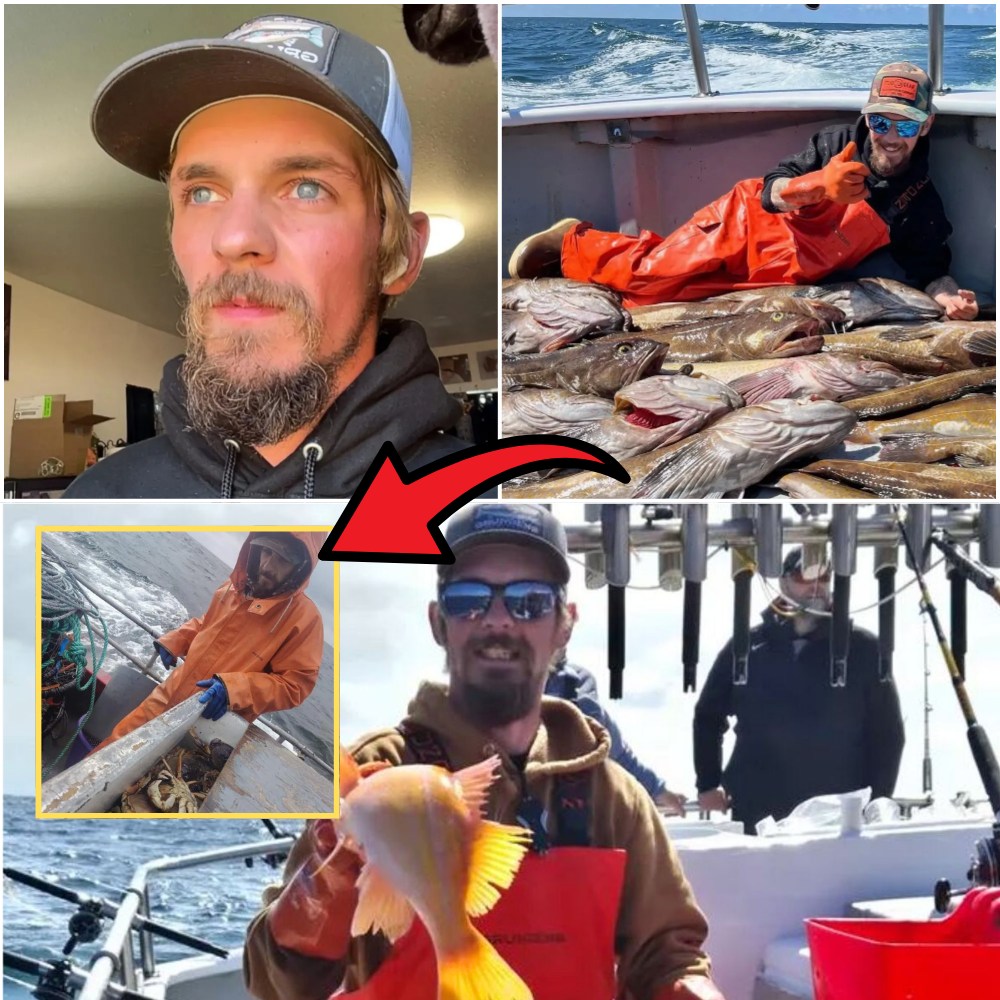
Captain Rick Shelford, the seasoned skipper of the Aleutian Lady, welcomed Meadows as the newest member of his tight-knit crew. In a poignant Facebook post that has since gone viral, amassing thousands of shares and condolences, Shelford painted a vivid picture of the young man who quickly became like family. “His love for fishing and his strong work ethic earned everyone’s respect right away,” Shelford wrote, his words dripping with raw emotion. “His smile was contagious, and the sound of his laughter coming up the wheelhouse stairs or over the deck hailer is something we will carry with us always.” Meadows wasn’t just there for the paycheck; he embodied the camaraderie that binds these seafaring warriors. Photos from his social media, now frozen in time, show a broad-shouldered young man with a mischievous grin, often posing with massive crabs or alongside his crew, the Aleutian Lady’s hull gleaming in the background under stormy skies.
But beneath that jovial exterior lay a deeper purpose: fatherhood. Meadows was a devoted dad to three young boys, whose faces lit up his world even amid the grueling shifts at sea. Sources close to the family reveal that he often spoke of his children during downtime on the boat, sharing stories of their antics back home and vowing to provide them with a better life through his hard-earned hauls. “Todd’s love for his children, his family and his life was evident in everything he did,” Shelford continued in his tribute. “He worked hard, loved deeply and brought joy to those around him.” These weren’t empty platitudes; Meadows’ social media feeds were peppered with snapshots of family outings—beach days, birthday celebrations, and tender moments that highlighted his role as a pillar for his loved ones. Tragically, those boys now face a future without their father’s guiding hand, a void that no amount of crab money can fill.

The incident that stole Meadows from them occurred on February 25, 2026, just after 5 p.m. local time, in waters approximately 170 miles north of Dutch Harbor—a remote Alaskan outpost that serves as a lifeline for Bering Sea fishermen. According to a U.S. Coast Guard spokesperson who spoke exclusively to Page Six, watchstanders at the Arctic District command center in Juneau received a distress call from the Aleutian Lady. Meadows had fallen overboard, vanishing into the churning waves that define the Bering Sea’s deadly reputation. The sea, notorious for its shallow depths averaging just 150 feet, amplifies every storm into a maelstrom. Volatile weather patterns can whip up 40-foot swells in minutes, while water temperatures hover around freezing, inducing hypothermia in mere moments. It’s no wonder the Bering Sea is dubbed the “deadliest” in the world; statistics from the National Institute for Occupational Safety and Health show that commercial fishing boasts a fatality rate 29 times higher than the national average, with falls overboard accounting for over half of those deaths.
Crew members sprang into action, their training kicking in amid the panic. They managed to recover Meadows from the frigid waters about 10 minutes later—a timeframe that, in warmer conditions, might have offered hope. But here, in the icy embrace of the Bering, those minutes were eternity. He was unresponsive, his body likely already succumbing to the shock of cold-water immersion. Desperate attempts at first aid and resuscitation followed, the crew pounding on his chest and forcing air into his lungs as the boat pitched in the swells. “They did everything they could,” the Coast Guard spokesperson recounted, underscoring the heroism amid the horror. Yet, their efforts proved futile. Meadows’ body was transported back to Dutch Harbor, where it awaited the grim formalities of investigation and autopsy.

The U.S. Coast Guard has launched a full probe into the incident, as is standard for all marine casualties. This investigation aims to dissect every detail: Was there a equipment failure, like a faulty railing or slick deck? Did fatigue play a role, given the relentless 20-hour shifts common in crab season? Or was it simply the sea’s capricious wrath—a rogue wave or momentary slip that no precaution could prevent? While autopsy findings remain pending, sources speculate that drowning compounded by hypothermia is the likely cause, a common killer in these waters. The probe could lead to new safety protocols, but for now, it offers little solace to those grieving.
Captain Shelford’s announcement over the weekend transformed private pain into public mourning. Describing it as “the most tragic day in the history of the Aleutian Lady on the Bering Sea,” he referred to Meadows as a “brother,” a term that carries profound weight in the insular world of commercial fishing. “My heart is broken in a way that words can’t fully express,” he admitted, before imploring the community to “lift Todd’s children and family in prayer and keep them in your thoughts as they face the days ahead without him.” The post concluded with a farewell that tugs at the heartstrings: “Todd will forever be part of this boat, this crew and this brotherhood. Though we lost him far too soon, his legacy will live on through his children and in every memory we carry of him. Rest easy brother, till we meet again.” Comments flooded in, from fellow fishermen sharing similar close calls to fans of the show expressing disbelief.
Sources previously leaked to TMZ that Meadows died in a “fishing-related incident during filming,” fueling speculation about whether Deadliest Catch cameras captured the ordeal. The show, renowned for its unflinching footage of disasters—capsized boats, massive injuries, and yes, even deaths—has often blurred the line between documentary and danger. It’s unclear if the cameras were rolling at that precise moment, but if they were, the footage could become a pivotal piece in the investigation or a haunting addition to the series. Discovery Channel, the network behind the long-running hit, issued a statement heavy with sorrow: “We are deeply saddened by the tragic passing of Todd Meadows. This is a devastating loss, and our hearts are with his loved ones, his crewmates and the entire fishing community during this incredibly difficult time.” The words ring true, but they also highlight the show’s controversial allure—viewers tune in for the peril, yet each real tragedy reminds us of the human cost.
In the aftermath, a GoFundMe page launched by a close loved one has become a rallying point for support. The campaign elaborates on Meadows’ life at sea, noting he was “crabbing out on Alaskan waters” when the accident struck. It pleads for donations to “help support his three boys, assist with funeral expenses, and help ease the financial burden in the months ahead.” As of March 4, 2026, the fund has surpassed $50,000, with contributions pouring in from fans worldwide. Donors leave messages of condolence, many referencing episodes where Meadows’ enthusiasm shone through. “Todd’s energy was infectious,” one wrote. “He reminded us why these guys risk it all.” The outpouring underscores the tight-knit fishing community, where losses like this ripple far and wide.
Meadows’ death adds to a grim roster of Deadliest Catch casualties, a series that has lost several stars in recent years, each story a testament to the job’s brutality. Nick McGlashan, a fan-favorite deck boss, succumbed to a drug overdose in 2020 at age 33, his battles with addiction laid bare on the show. Nick Mavar, known for his resilience, died in 2024 at 59 after a medical emergency at sea. Mahlon Reyes passed in 2020 from a cocaine overdose, while captain Blake Painter was found dead in 2018 at 38, his cause linked to substance abuse. These tragedies often stem from the physical and mental toll of the trade—endless hours, isolation, and the constant specter of death. Meadows’ case, however, stands out for its youthfulness; at 25, he was just beginning what could have been a storied career.
Experts in maritime safety point to systemic issues exacerbating these risks. The Bering Sea’s crab fishery, while regulated with quotas to prevent overfishing, demands peak-season intensity that pushes crews to their limits. Falls overboard are alarmingly common, with the Coast Guard reporting dozens annually. Safety gear like immersion suits and personal locator beacons can save lives, but in split-second accidents, they’re not always deployable. Advocacy groups like the Alaska Marine Safety Education Association push for better training and equipment, but enforcement varies. “Every death is preventable,” says one safety consultant. “But until the industry prioritizes rest and tech over quotas, we’ll keep seeing this.”
For Meadows’ family, the pain is personal and profound. His boys, too young to fully grasp the loss, will grow up with stories of their dad’s bravery. Relatives have remained private, but the GoFundMe hints at their struggle: funeral costs alone can exceed $10,000, and without Meadows’ income, stability hangs in the balance. Community vigils in Dutch Harbor and beyond have sprung up, with fishermen sharing toasts in his honor. “He was one of us,” a fellow crabber told local media. “Gone too soon, but never forgotten.”
As the investigation unfolds, the world watches, hoping for answers that might prevent future heartbreaks. Meadows’ legacy endures—not just in the episodes he filmed, but in the lives he touched. His laughter echoes in memory, a reminder that amid the deadliest catch, the greatest treasure is life itself. Yet, the sea rolls on, indifferent, claiming its due. In this tragic chapter, Todd Meadows becomes a symbol of the dreams drowned in pursuit of the horizon.
The Bering Sea’s allure is undeniable: vast fortunes in crab, the rush of conquest over nature. But for every triumphant haul, there’s a shadow of peril. Meadows knew the risks; all fishermen do. His story compels us to reflect on the human element in reality TV—where entertainment meets mortality. As fans mourn, perhaps it’s time to demand more from the industry: safer boats, better oversight, and a recognition that no catch is worth a life.
In the quiet harbors of Alaska, boats bob gently, but the storm of grief rages. Todd Meadows, rest easy, brother. Your light, though extinguished too soon, guides those left behind.